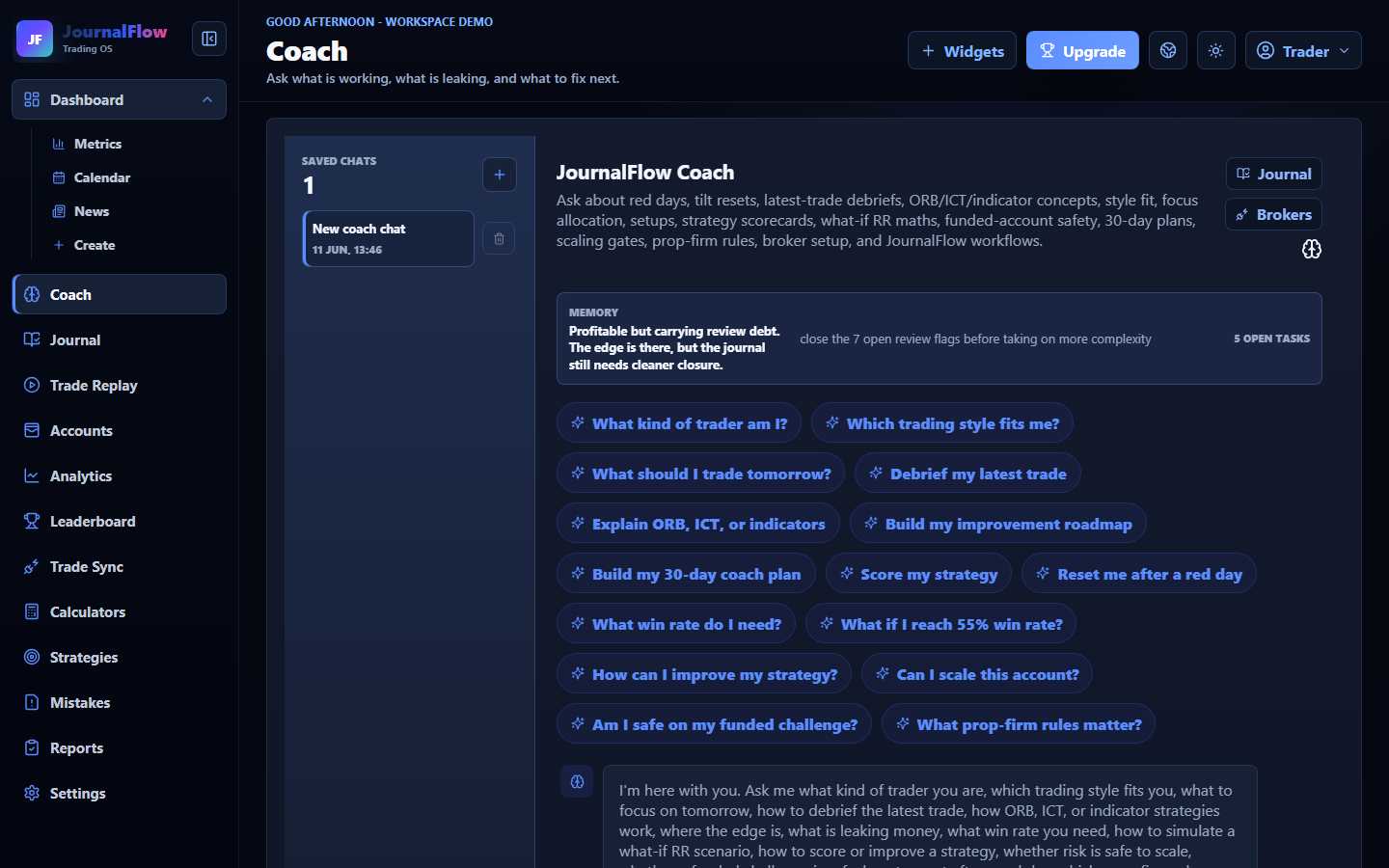
An AI trading journal is not useful because it sounds clever. It is useful when it can read structured trading evidence and turn a messy week into one clearer rule for the next session.
It should read the journal, not guess the market
The best AI trading journal starts from the trader's own records: trades, screenshots, RR, setup tags, session labels, mistakes, emotions, account guardrails, and review notes.
- Use logged trades and screenshots as the evidence base
- Review process, risk, and discipline before profit
- Avoid live buy/sell calls, signals, and profit promises
It should make review easier to repeat
A trader does not need another long chat thread after every session. They need the journal to show what happened, what repeated, and what should change before the next trade.
- Find repeated mistake cost and weak review habits
- Compare setup, session, symbol, and RR patterns
- End with one next action the trader can actually follow
It should stay honest about evidence
AI review gets weaker when the journal is incomplete. Missing screenshots, inconsistent setup names, or vague notes should be called out instead of hidden behind confident-sounding advice.
- Say when sample size is too small
- Ask for screenshots or cleaner tags when proof is missing
- Use manual logging or CSV upload while direct sync is still being proven