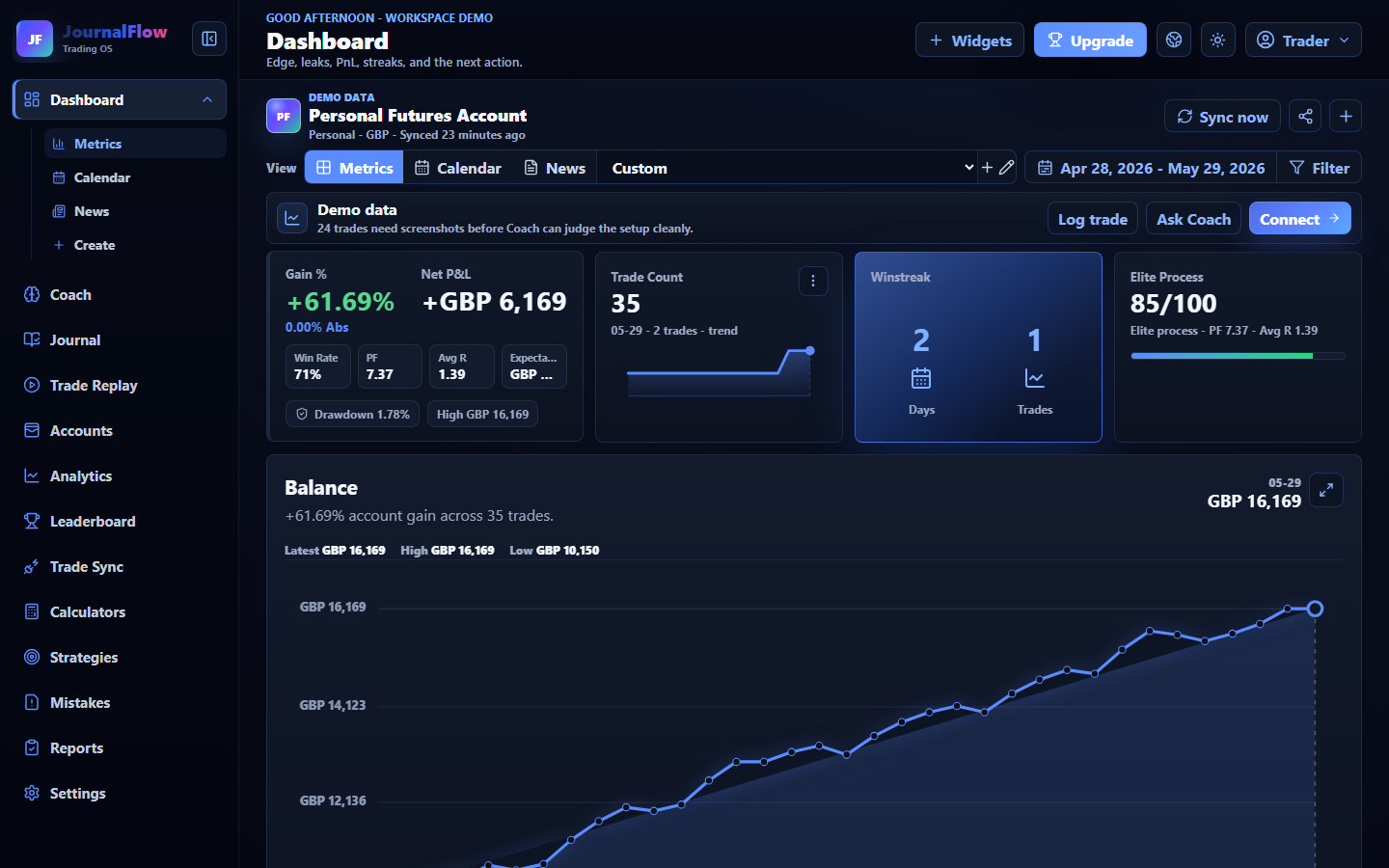
Most trading journals fail because they only record what happened. A better template records why the trade was taken, whether it followed the plan, how much risk was used, and what the trader should change next.
Track the decision, not just the trade
The entry and exit matter, but they are not enough to improve a trader. The journal should capture the setup, session, market condition, planned invalidation, risk used, RR, and whether the trade matched the playbook.
- Date, account, market, symbol, side, setup, and session
- Risk amount, planned RR, realised RR, result, and fees
- Rule followed, rule broken, mistake tag, and confidence level
Add chart evidence before memory edits the story
Screenshots keep the review honest. Without chart evidence, it is too easy to turn a bad entry into a good idea after the fact, or blame the market when the plan was not visible.
- Attach entry screenshot and exit screenshot where possible
- Mark the reason for entry, invalidation, target, and management decision
- Separate clean losses from trades that broke the process
End every review with one next action
A trading journal should not become a warehouse of data. The review should reduce the next trading day into one setup to focus on, one mistake to avoid, and one risk rule to protect.
- Write one rule for the next session
- Review one leak before adding more size
- Track whether the next five trades obeyed the repair rule