Risk reward tracking

How to track risk reward ratio in a trading journal

RR tells a trader whether the edge pays enough when it wins. Track planned RR, realised RR, average winner, average loser, and rule breaks together.

6 min read JournalFlow guide
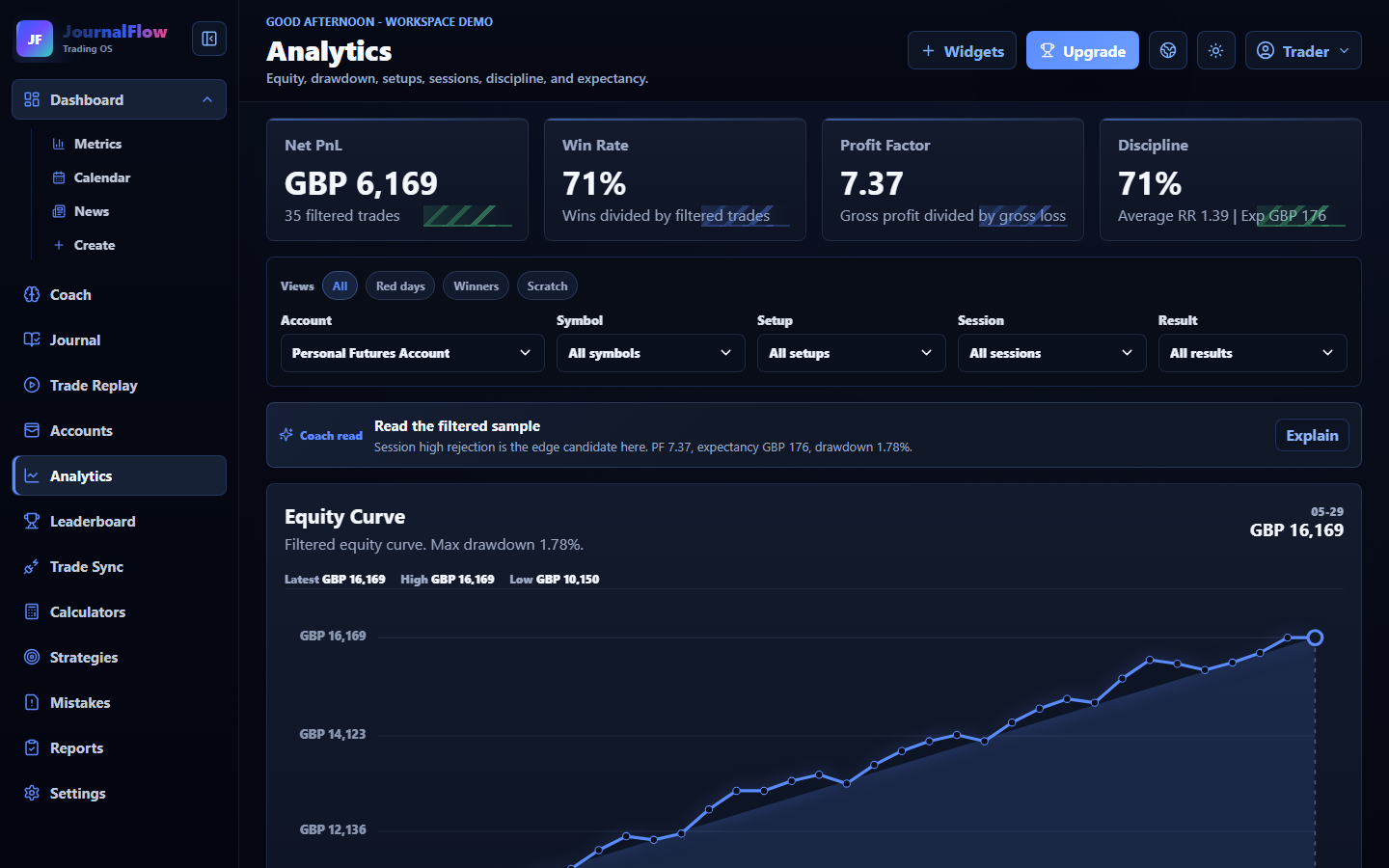
Risk reward trackingJournalFlow analytics showing trading performance review

PnL can lie to a trader, especially when account size changes. RR makes trades comparable. A 2R winner and a 1R loss tell a clearer story than random pounds, dollars, or points.

Separate planned RR from realised RR

Planned RR is the trade idea before execution. Realised RR is what actually happened after management, partials, early exits, slippage, or rule breaks. Both numbers matter.

  • Planned RR shows whether the setup had enough room
  • Realised RR shows whether trade management helped or hurt
  • The gap between them often reveals early exits or poor target discipline

Use R to compare different markets

A futures trader, forex trader, and crypto trader can all review trades in R even if their account sizes, contracts, and currencies are different.

  • Track risk per trade as 1R
  • Convert results into R-multiple as well as account currency
  • Review setups by average R, not just win rate

Combine RR with mistake cost

A high RR strategy can still fail if the trader breaks rules. Track the R lost to early entries, late exits, revenge trades, overtrading, and invalid setups.

  • Compare clean losses against broken-rule losses
  • Track whether a mistake reduced a winner from 2R to 0.5R
  • Use the next review to repair one management rule

Questions traders ask

Clear answers before opening the workspace.

Why is RR important in a trading journal?

RR helps traders compare trades by risk instead of account size. It shows whether winners pay enough, whether losses are controlled, and whether trade management is hurting expectancy.

Should I track RR if I already track PnL?

Yes. PnL shows money made or lost, but RR shows how efficiently the trader used risk. Both are useful, especially for funded accounts and strategy review.

What RR do traders need to be profitable?

There is no single RR number. Profitability depends on win rate, average winner, average loser, fees, execution quality, and whether the trader follows the strategy.

Put the guide into practice

Open the demo and see the journal workflow live.

The guide explains what to track. JournalFlow shows how trades, screenshots, RR, setups, mistakes, reports, and Coach fit together.

Try the demo workspace